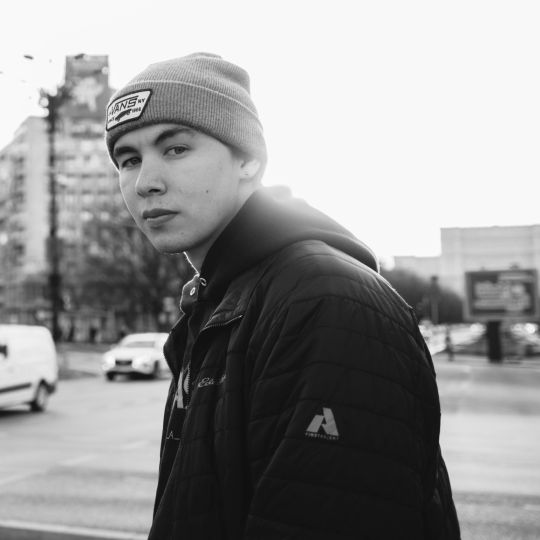
The Short Version
I’m an Audio Visual Specialist in Toronto. I install, configure, and maintain broadcast infrastructure across international studio locations: ATEM switchers, cameras, audio systems, SDI routing, the whole signal chain. For the past two years I’ve also been using AI tools to build web applications that solve real problems my team deals with every day. I’m not a trained software developer, but the tools I’ve built are in production in two countries.
Background
I got into video early, shooting and editing freelance through high school and then studying it at Durham College. After graduating I went straight into live broadcasting at TraderTV.LIVE, where I ran a daily financial show for three years. That’s where I got deep into Blackmagic hardware: ATEM 4 M/E panels and Constellation 8K switchers, a virtual studio in Unreal Engine, and control automation with Bitfocus Companion.
In 2023 I joined ARRISE (Pragmatic Play) as an AV Specialist. I was hired before the Toronto studio existed, spent three months training in Bucharest, then came back and built the Toronto studios and server room from empty rooms. Since then I’ve been on site in Colombia and Romania for studio builds and team training.
I do the work myself: pulling SDI, configuring cameras, keying greenscreens, tracing signal paths, and training teams on everything from ATEM macros to Ultimatte holdout masks. The department manages hundreds of devices across multiple facilities.
How the Development Started
In late 2024 I got tired of the spreadsheet we used to track equipment. Hundreds of devices, hard to search, impossible to act on, always slightly out of date.
So I built a small web app to put it in a real database. Once every device had a record with an IP address, the ideas came fast. What if clicking an ATEM opened a live control panel? What if you could ping everything from the browser? What if image uploads to switchers could be scheduled automatically? Each question turned into a feature, and the platform kept growing.
I didn’t know Django, WebSockets, or Docker when I started. What I had was a clear understanding of the problems, a strong feeling that better solutions should exist, and AI tools that could help me build them.
How I Build
Claude Code is my main coding tool. I describe the problem, read what it writes, and push back when it’s wrong, which is often enough that reading is not optional. The architecture stays mine: what talks to what, what runs where, what has to survive a network hiccup during a live stream. When I needed ATEM commands no library exposed, I sat in Wireshark reading hex dumps, because no AI does that for you. Everything gets tested against real hardware before it ships.
AI is good at code. It isn’t good at knowing what breaks a live stream. That part comes from years with this equipment and these teams, and it’s why the tools work. I think this is where a lot of technical work is heading: you don’t need to be a developer to build useful software, but you do need to know your domain well enough to know what to build.
What I’ve Built
It hasn’t been a straight line. The first equipment database was a Flask app, ugly and barely functional, but it worked and it taught me how web frameworks operate. I rebuilt it properly in Django. Live control pushed me into Channels. Deploying to a second country meant Docker. SSL and routing meant Nginx and Cloudflare. Every problem pulled me into something new.
Two years in, the platform includes ATEM and X32 control in the browser, automated content scheduling, overlay management, equipment monitoring, and custom protocol handlers. It’s containerized, deployed in Toronto and Bucharest, and used daily. Along the way I’ve reverse engineered parts of the ATEM protocol, contributed to open source ATEM libraries, and built a proof of concept that connects Unreal Engine to real broadcast hardware.
None of it came from a single prompt. It came from months of building, breaking, debugging, and learning, using AI to move faster but doing the thinking myself.
The projects and journal on this site document all of it: not just what was built, but how and why.
If you want to talk broadcast, AV infrastructure, building tools with AI, or anything else, reach me at [email protected].